
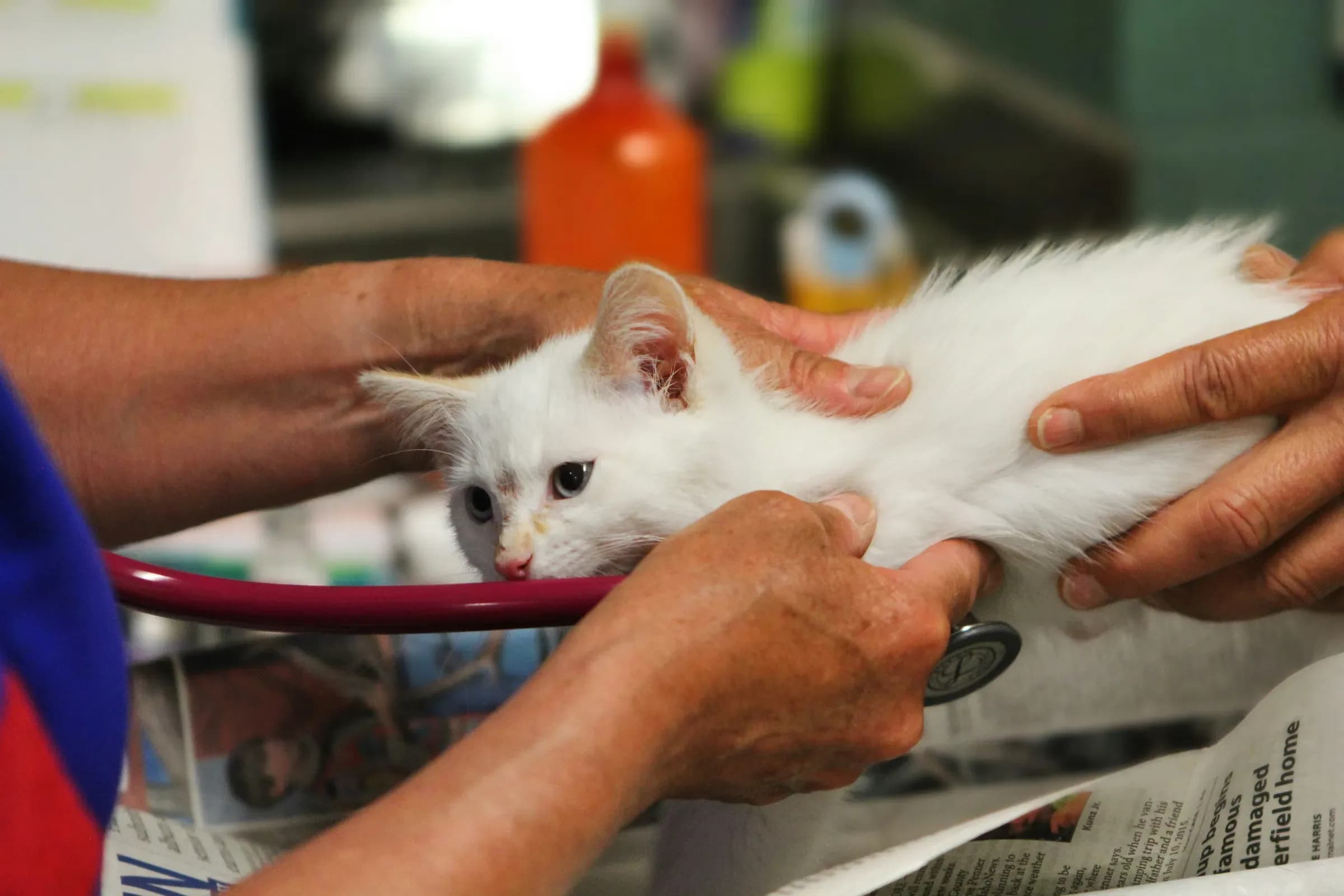

Two years ago, a large survey of veterinary professionals found that 39.2% used AI tools in their work. The follow-up, released on October 1, 2026, by the practice software company Digitail and the American Animal Hospital Association, puts the figure at 83.7%.
That is the number that will be quoted. It is not the most useful one in the report. The finding with more practical weight is that 65.2% of practices added AI without meaningfully changing their workflows, and that roughly a fifth of users report no measurable impact at all.
What the study measured
The 2026 study collected 1,730 self-reported responses from veterinary professionals in the United States and Canada between 27 July and August 12, 2026. It kept core questions from the 2024 edition, which had 4,031 respondents and was published in the American Journal of Veterinary Research, so the two years can be compared on those measures.
| Measure | 2024 | 2026 |
|---|---|---|
| Respondents using AI | 39.2% | 83.7% |
| Users engaging daily or weekly | 69.5% | 88.3% |
| Fear of job displacement | 37.2% | 20% |
| Top concern: reliability and accuracy | 70.3% | 67.4% |
| Concern: data security and privacy | 53.9% | 59% |
| Concern: lack of training | 42.9% | 47.1% |
Sources: Digitail and AAHA release via PR Newswire, October 1, 2026; dvm360, October 6, 2026; Global Pet Industry, April 2024, for 2024 concern figures.
The way the profession uses AI is narrow. Clinical documentation, meaning AI scribes and SOAP note generation, was the most common use, cited by 62.8% of users. Practices used AI in an average of 3.33 areas.
Attitudes have shifted with use. Optimists made up 56.3% of respondents and skeptics 22.7%, and fear of losing jobs to AI roughly halved. Concerns that come with real use went the other way: worries about data security and lack of training both rose. Reliability and accuracy remained the top concern, at 67.4%.
Looking ahead, 79.8% expect AI to be part of most clinic workflows within five years.
The adoption number, with a grain of salt
Before taking 83.7% as the state of the profession, it is worth comparing it with other surveys.
Instinct Science's 2026 market survey, published in March, found that 48% of general practices use AI in some capacity, and that 63% of those use it for medical records and SOAP notes. That is a much lower adoption figure with a very similar picture of what AI is used for.
The two are not necessarily in conflict. Digitail and AAHA counted individual professionals who use AI, including tools they use on their own. Instinct counted practices that have integrated AI. Surveys about technology also tend to attract respondents who are interested in technology, and both of these come from companies that sell software to practices. The safest reading is that a clear majority of veterinary professionals have now used AI at work, mostly for notes, and that formal practice-level adoption is lower.
The finding that matters: adoption without redesign
The study built a Veterinary AI Maturity Index, scoring practices from 1 to 4 across six dimensions. The average was 2.67.
The governance results are where most practice owners will recognize themselves:
- 65.2% of practices added AI without meaningfully changing workflows.
- Nearly half have no AI strategy or designated owner.
- About a third lack basic governance, such as usage guidelines, staff training, a named AI lead or a formal review of tools.
And the outcomes track the maturity. About 20% of users reported no measurable impact yet. Among practices at the lowest maturity level, 70.9% reported no measurable impact, compared with about 11% at levels 3 and 4. The study's authors say the most strategic practices report six times the business outcomes of the least mature.
Among practices that did see results, the most common were higher patient throughput (44.3%), better client retention or satisfaction (32%) and new or expanded digital services (29.2%).
"Two years ago, the question was whether veterinary professionals would even try AI," said Sebastian Gabor, Digitail's CEO and cofounder. "Practices that take a strategic approach report more time with patients, stronger client retention and more revenue."
Bill Voegeli, president of Association Insights, which led the research with AAHA, explained why the study focused on maturity rather than just usage: "Most surveys tell you how many veterinary professionals are using AI."
A caution on the six-times figure: it is an association in self-reported survey data. Practices that plan their AI use carefully may also be better run in other ways. The pattern is still worth taking seriously, because it matches what most people who have tried to introduce any new tool into a clinic already suspect. A tool dropped into an unchanged workflow tends to get used a little and then fade.
Documentation was the first step
Almost every number in this study points to documentation as the place AI has entered veterinary practice. That makes sense. Notes are time-consuming, they happen after the work, and a draft is easy for a veterinarian to check and correct.
The harder and less explored territory is AI that works during the clinical moment rather than after it: in the anesthesia record, at the dental chart, on the road between farm calls. viggoVet, which publishes this site, builds for that category, for example with AI Anesthesia Assist, which reads each vitals entry against the whole patient and returns an advisory comment for the veterinarian to weigh. The study's lesson applies there just as much. Any tool used in the room has to be fitted into how the team already works, or it will not be used.
What it means for your practice
You do not need a consultant to act on the governance findings. A few concrete steps cover most of what the study found missing:
- Name an owner. One person who knows which AI tools the team uses, including the free ones individuals have signed up for on their own.
- Write a one-page policy. What tools are approved, what patient and client data can go into them, and who reviews AI-generated notes before they enter the record.
- Decide what you are trying to change. Shorter note-writing time, more appointments a day, faster discharges. Pick one, and measure it before and after.
- Change the workflow on purpose. If an AI scribe saves fifteen minutes per veterinarian per day, decide where those minutes go. Otherwise they disappear.
- Train the whole team, not only the vets. Lack of training was one of the concerns that grew most between 2024 and 2026.
- Ask vendors the data questions. Where data is stored, whether it is used to train models, and how it can be exported. Data security was the second biggest concern in the study and rising.
What we still do not know
Neither this study nor any other large survey yet shows whether AI use is improving clinical outcomes for patients, as distinct from saving time on paperwork. That is the question the profession will need better evidence on next. For now the clearest finding is a management one: most veterinary professionals have started using AI, and most practices have not yet decided what they want it to do.
References
- Digitail and American Animal Hospital Association, (2026). Veterinary AI Use Reaches 83.7%, and Practices That Adopt It Strategically Report Six Times the Business Outcomes: Digitail and AAHA Study,Link
- Caitlin McCafferty, (2026). Artificial intelligence use among veterinary professionals more than doubles in 2 years,Link
- Global Pet Industry, (2024). Almost 40% of vets are using AI tools to gain a competitive edge,Link
- MyChesCo, (2026). Instinct Science Surveys Show AI Adoption, Staffing Strains in Vet Care,Link
- Digitail, (2026). The State of AI in Veterinary Medicine: 2026 Digitail and AAHA Study,Link