
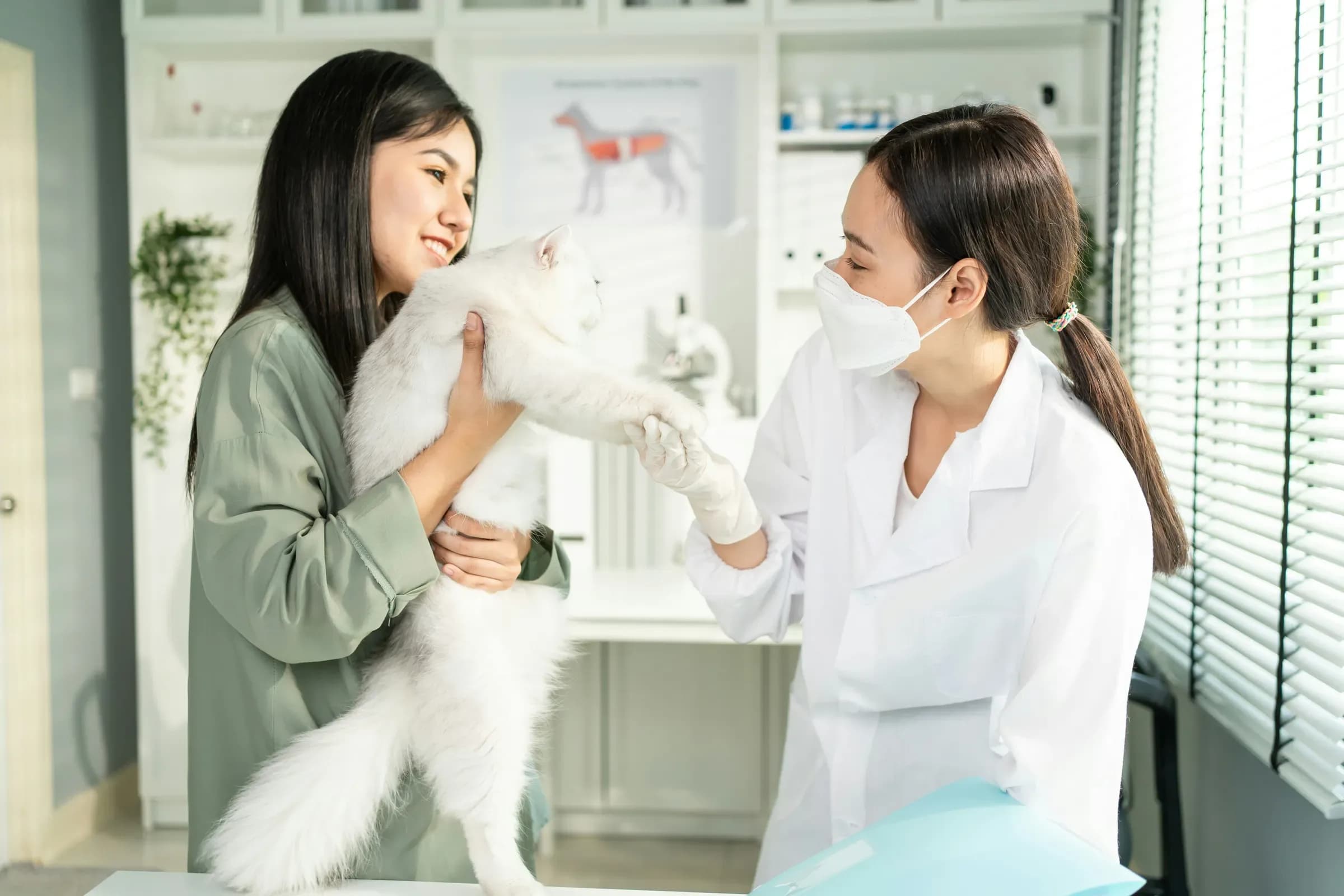

Sooner or later a client asks whether their dog could have its teeth cleaned without anesthesia. A groomer offers it, a neighbor's dog had it done, or they saw it advertised for a fraction of the price of a dental. The question is rarely about dentistry. It is almost always about fear, of anesthesia first and cost second, and the way you answer decides whether that dog ever gets its mouth properly treated.
What the AVDC says
The American Veterinary Dental College's position is unambiguous. It does not use the phrase "anesthesia-free dentistry" at all, preferring "Non-Professional Dental Scaling" (NPDS), and it describes performing NPDS on an unanesthetized pet as inappropriate. Its reasons are specific, and they are worth knowing well enough to explain in plain words.
The disease is below the gumline. In the AVDC's words, "the most critical part of a dental scaling procedure is scaling the tooth surfaces that are within the gingival pocket," where periodontal disease is active, and "access to the subgingival area of every tooth is impossible in an unanesthetized canine or feline patient."
Clean-looking teeth are not treated teeth. "Removal of dental tartar on the visible surfaces of the teeth has little effect on a pet's health, and provides a false sense of accomplishment. The effect is purely cosmetic."
The mouth cannot be examined properly. "A complete oral examination... is not possible in an unanesthetized patient. The surfaces of the teeth facing the tongue cannot be examined, and areas of disease and discomfort are likely to be missed."
Anesthesia protects the patient. Inhalation anesthesia with a cuffed endotracheal tube gives cooperation with a procedure the animal does not understand, removes the pain of examining and treating diseased tissue, and protects the airway and lungs from aspiration. Without it, "even slight head movement by the patient could result in injury to the oral tissues."
The statement also points out that in the US and Canada, anyone other than a licensed veterinarian or a supervised, trained veterinary technician who provides dental services is practicing veterinary medicine without a license.
The part owners do not know: what staging needs
The most persuasive clinical argument is not about scaling at all. It is about diagnosis.
Periodontal disease is staged by attachment loss, from PD1 (gingivitis only) through PD4 (more than 50% of attachment lost). Anything beyond PD1 can only be found by probing each tooth and taking dental radiographs, and neither is possible in a conscious dog or cat. An anesthesia-free cleaning does not skip a step of treatment. It skips diagnosis entirely, and it returns a mouth that looks healthy enough that nobody looks again.
That matters because periodontal disease is common and undercounted. It was the most frequently diagnosed disorder in UK dogs under primary care, recorded in 12.5% each year (O'Neill et al., 2021), and studies examining dogs under anesthesia have found it far more often. See our piece on the stages of periodontal disease for the detail.
Putting the anesthetic risk in proportion
The owner's real question is "will my dog die under anesthesia?" It deserves a real number rather than reassurance.
In the largest prospective study of small animal anesthetic mortality (CEPSAF, 98,036 dogs and 79,178 cats in 117 UK centers), the risk of anesthetic-related death for a healthy dog, ASA grade 1 or 2, was 0.05%, roughly 1 in 1,849. For a healthy cat it was 0.11%, roughly 1 in 895. For sick patients, ASA 3 to 5, the risk was far higher, about 1 in 75 for dogs and 1 in 71 for cats (Brodbelt et al., 2008). A later UK primary care study of 157,318 dogs found an overall anesthetic-related death rate of 0.10% within 48 hours (Shoop-Worrall et al., 2022).
In the largest prospective study of small animal anesthetic mortality (CEPSAF, 98,036 dogs and 79,178 cats in 117 UK centers), the risk of anesthetic-related death for a healthy dog, ASA grade 1 or 2, was 0.05%, roughly 1 in 1,849. For a healthy cat it was 0.11%, roughly 1 in 895.
Source: CEPSAF, Brodbelt et al., Veterinary Anaesthesia and Analgesia 2008. Healthy = ASA 1 to 2; sick = ASA 3 to 5.
Two things follow, and both help the conversation. For most dogs presented for a routine dental, anesthetic risk is low and can be stated honestly as such. And the risk rises with illness, which is an argument for treating dental disease before the dog is old and sick, not for avoiding anesthesia until it is.
How to answer the owner
Most owners asking this are trying to do the right thing on a budget they are worried about. Arguing with them rarely works. Explaining usually does. A sequence that works in practice:
Most owners asking this are trying to do the right thing on a budget they are worried about. Arguing with them rarely works.
- Start with the worry. "It makes sense to be nervous about anesthesia. Most people are."
- Explain where the disease is. "The problem we need to treat is under the gumline, around the roots. Cleaning without anesthesia can only reach the part of the tooth you can see, so the teeth look better but the disease is still there."
- Give the real number for this dog. For a healthy dog, the risk of dying from anesthesia is around 1 in 2,000 in the best large study we have. Say what you do to keep it that low.
- Explain what you will find. "Under anesthesia we can probe every tooth and take X-rays. That's the only way to know which teeth are healthy and which need treatment."
- Put it in writing. Owners decide at home, often with someone who was not in the consult. A written explanation of what was found, what treatment involves, what it costs, and what waiting costs travels further than anything you say in ten minutes.
That last step is the one practices most often skip, because writing a clear explanation for every dental case takes time nobody has. It is why AI Dental Chart produces an owner-facing letter from the same charting the clinician already does, which the veterinarian reviews before it goes to the owner. For the anesthetic itself, AI Anesthesia Assist gives the team an advisory stability or risk read at each vitals entry. viggoVet's AI is clinical decision-support only: it assists, it does not decide, and the licensed veterinarian holds full clinical responsibility. It is not a medical device, monitor, or alarm.
The short version
Anesthesia-free cleaning treats what can be seen and leaves the disease that matters untouched, while making the mouth look healthy enough that nobody investigates further. The owner asking about it is usually asking about fear. Answer the fear with a real number and a clear explanation, in writing.
References
- American Veterinary Dental College (2004). Companion Animal Dental Scaling Without Anesthesia.Link
- Brodbelt DC, et al (2008). The risk of death: the Confidential Enquiry into Perioperative Small Animal Fatalities. Veterinary Anaesthesia and Analgesia
- (2022). Shoop-Worrall SJ, O'Neill DG, Viscasillas J, Brodbelt DC. Veterinary Anaesthesia and Analgesia 2022. doi:10.1016/j.vaa.2022.03.006 Veterinary Anaesthesia and Analgesia
- (2021). O'Neill DG, et al. J Small Anim Pract 2021;62(12):1051 to 1061 (periodontal disease prevalence): J Small Anim PractLink